
In an emergency
Don’t book online. Call us on 03 9328 3021 or come straight to 24 Villiers Street, North Melbourne. If you can, call ahead so our team is ready for you.
For the signs that your pet needs urgent care and how to prepare for the trip, see Emergency care.
What our emergency service covers
Our emergency team sees everything from minor concerns to critical emergencies, including injuries, breathing problems, poisoning, seizures and sudden illness. We treat dogs, cats, rabbits, guinea pigs, ferrets, reptiles and wildlife.
With pathology, X-ray, ultrasound and CT onsite, we can quickly find out what’s wrong, stabilise your pet and start treatment. Pets who need to stay with us are cared for in our intensive care unit, with an ICU vet and nurses on duty around the clock.
As Australia’s largest not-for-profit animal hospital, choosing Lort Smith means your pet receives quality care while helping us support families doing it tough who rely on our services to care for their pets.
What happens when you arrive
- Triage: a triage nurse checks your pet as soon as you arrive. The most critical patients are seen first, so you may need to wait if your pet is stable.
- Consultation: a vet examines your pet and explains what they think is happening, your options and the costs, before anything goes ahead.
- Treatment: your pet may have tests, treatment in the emergency department or a stay in our intensive care unit. We’ll keep you updated.
- Going home: before you leave, we’ll explain how to care for your pet, what to watch for and whether they need a follow-up visit.
Outside our opening hours
Our emergency department is open 8:00am to 10:00pm. Outside these hours, please go to a 24-hour emergency clinic. See our list of after hours clinics.
Equipment we use
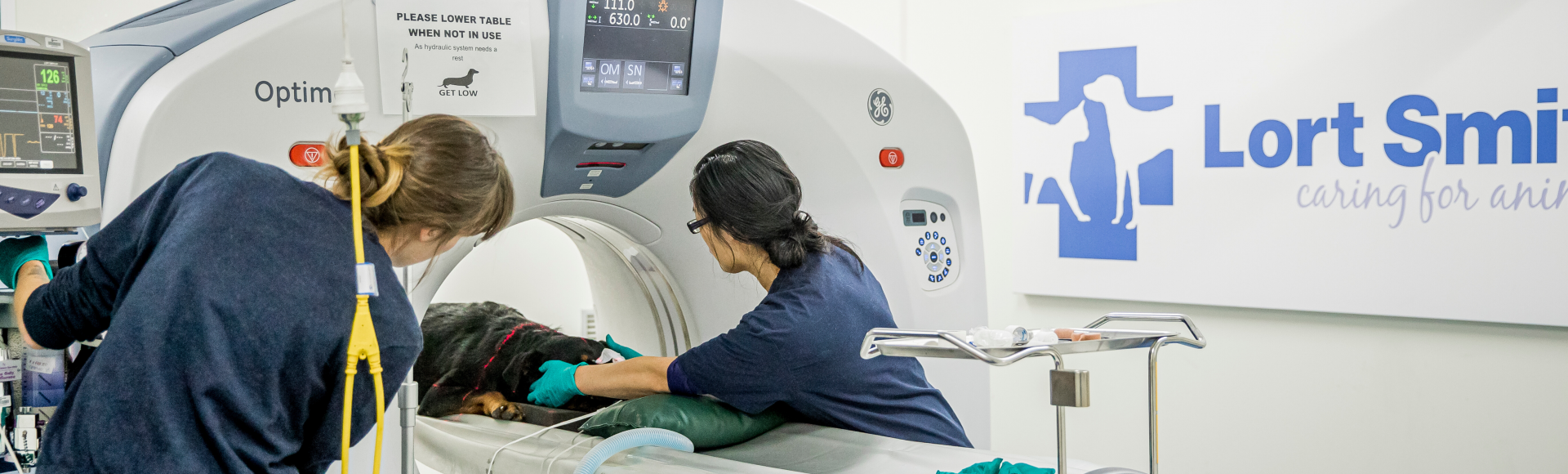
- CT scanner: produces detailed 3D images, helping our vets find cancers earlier, map internal injuries and plan surgery, often without exploratory surgery.
- In-house pathology laboratory: lets us run blood tests on site, so we can find out what’s wrong and start treatment sooner.
- Digital X-ray: gives our vets a quick look at bones, the chest and the belly, to check for fractures, swallowed objects and fluid.
- Ultrasound: lets our vets see your pet’s heart and organs in real time, without surgery.
- Oxygen therapy and humidicribs: help pets with breathing problems, and keep very small or fragile patients warm and supported.