Client stories
Every animal that comes through our doors has a story. Here are some of the pets, people and moments that make Lort Smith what it is.
Filter
Filter
Story
Clear filters
View stories
Filter
Story
- Tails of Lort Smith
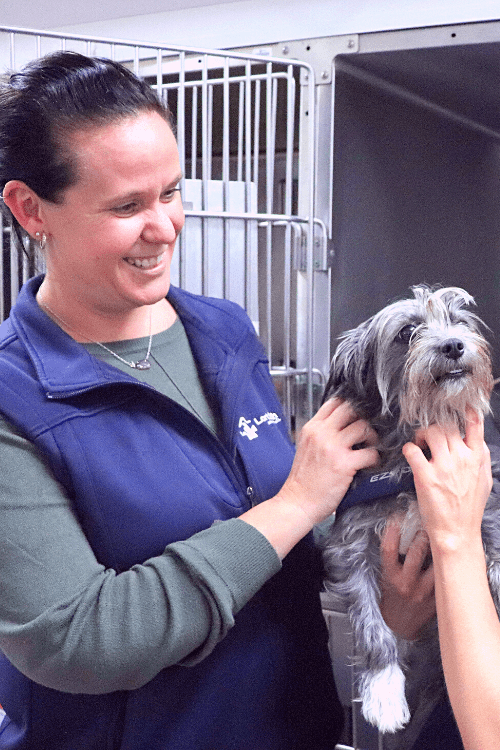
Dana
Dana is the General Manager, Nursing Services, and has worked at Lort Smith for nine years. She manages the entire nursing program, including approximately 90 vet nurses. Her role involves:
- recruitment, training and retention
- professional development
- rostering
- relationship management
- OH&S
- improving systems and processes
- managing the Melbourne Polytechnic nursing students (80–100).
There are various areas of nursing at Lort Smith: surgery, accident and emergency, critical care, wildlife and exotics, and inpatients.
"At Lort Smith, you are working with lots of people with different skillsets. The opportunity to learn is great. The types of cases you see in a day would be the same as what you would see in a year at a general vet practice," explains Dana.
As part of our nursing program, we have a nurse educator who provides mentoring and upskilling opportunities. The variety of shifts, knowledge and skills our nurses have access to is immeasurable.
Vet nurses at Lort Smith use advanced technology, including a CT scanner, advanced anaesthetic monitoring and X-ray imaging, which they may not have access to at smaller practices.
"Our nurses come from a variety of backgrounds and possess a real team mentality. Strong friendships are formed between the vet nurses and they offer great support to each other," says Dana proudly.
The types of cases you see in a day would be the same as what you would see in a year at a general vet practice.
Dana
Why Lort Smith
"When I think about working for an organisation so old, and one that carries the same values I have, I feel proud. Lort Smith gives everyone the same opportunity to have and love a pet, and to experience the human-animal bond. I'm proud of the fact that a female created Lort Smith and it is still here today."
Read more
- Pet Therapy
Polly
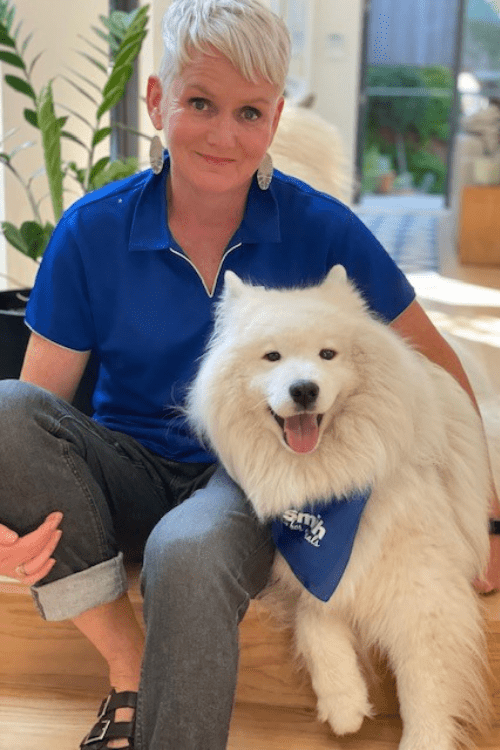
Polly has held a variety of roles in her career, from running The Body Shop Australia to now managing a property portfolio for a client. Since 2018, she has also found time to volunteer in the Lort Smith Pet Therapy Program.
Over the years, Polly has volunteered with three of her beautiful Samoyeds, bringing comfort and joy to patients, families and staff at the Royal Women's Hospital, the Royal Melbourne Hospital and, more recently, headspace.
"I started with Lily, who has since passed away. Now, Rosie and I volunteer at The Royal Melbourne Hospital," explains Polly.
I love that with pet therapy it is just me and the dog working together to try and make a difference.
Polly
Teddy
Last July, Polly adopted Teddy from the RSPCA. He was an inspectorate case who arrived very underweight and neglected. Teddy has gone from spending 24 hours a day outside to living a life of luxury indoors, spending most of his time getting cuddles on the couch.
"Teddy is about to turn seven. He was 10 kilos lighter than he is now and his gorgeous white fluffy coat has regrown. He loves to talk! All Samoyeds talk; but he talks more than any Samoyed we have ever known," laughs Polly.
Teddy has such a sweet personality that Polly enrolled him as a Lort Smith Pet Therapy dog. He passed with flying colours!
"Teddy is the perfect name. Not many dogs truly love cuddles, especially from strangers, but Teddy couldn't get enough. We couldn't stop hugging him – the most huggable dog I've ever met," says Megan Nutbean, Lort Smith Community Programs Manager.
"From the first moment he arrived, he craved affection. Teddy can't walk past anyone in the street without stopping for a pat. He is gentle and patient, I immediately thought he'd make a lovely therapy dog," says Polly.
"Recently we visited headspace, it was wonderful. Teddy was a 'natural' as I suspected he would be. I found it very humbling. … There were twice as many staff as clients there! That's the lovely thing about pet therapy, it's for everyone!" says Polly.
Making a difference
Polly has always volunteered in some way. She truly believes that if you want to create a better society, you need to jump in and try to make it so! While juggling a busy life with work and volunteering can sometimes be a challenge, Polly always walks away feeling grateful for being able to share these intimate moments with people, and grateful for her own good fortune.
"I've been lucky to sit on boards where you work to advocate for the greater society or develop policy. But I love that with pet therapy it is just me and the dog working together to try and make a difference," says Polly.
One of Polly's most memorable Pet Therapy moments was with Rosie:
"We were asked to sit with a woman who had just been given some very bad news about her diagnosis/life expectancy. She was sitting in her wheelchair, very distressed waiting on her family to arrive. Rosie instinctively walked over to her and placed her head on her knee. As the woman stroked Rosie's head, she slowly started calming down and could talk about her fears and heartache. I felt honoured we could be there during that really hard time," says Polly.
Read more
- Tails of Lort Smith
Pat
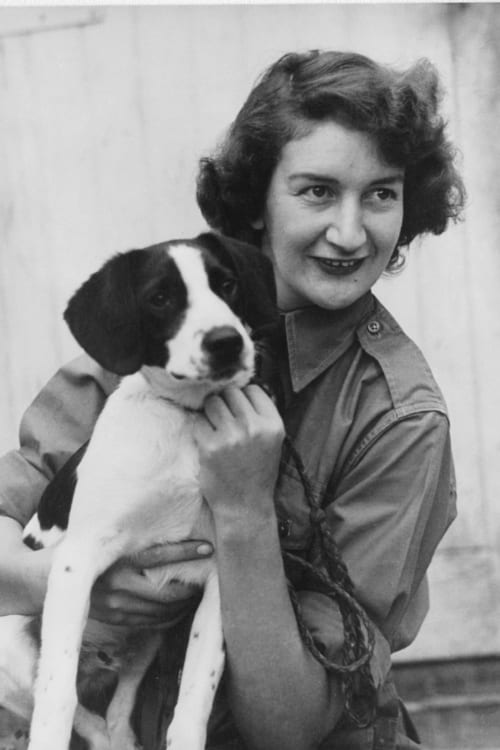
In 1948, a weekend at Lort Smith earned you $4, and it cost $1.25 to spey a cat. That's when Pat Jarratt started work.
Raised on a farm, Pat had always looked out for strays. After the war, she read about Lort Smith in the paper. "I rang and enquired about volunteer work. They told me they didn't offer volunteer work but they did have weekend work available. I started, on my own, the next Saturday and I didn't know the blunt end from the sharp end of the hospital. The phone used to ring non-stop!"
The animal ambulance
Pat did a bit of everything: answering the phone, feeding and exercising animals, cleaning cat cages, and driving the ambulance. For collecting several animals, she took the English Bedford. "It had paintings of little critters with bandages all over it. And compartments for the cats and dogs."
"I could count on one hand the number of vet clinics in Melbourne in those days. There were only two or three in the metropolitan area, and none were open on weekends – so we just had to do the best we could."
Her most memorable patient was an old dog found by workmen demolishing a house in Essendon. "When I got there, the two 'heroes' were drinking a cup of tea and one of them asked 'haven't you got a man with you?' and I replied 'no, I don't need a fella!'" Inside was a filthy, battle-scarred dog whose feet "looked like swollen red footballs". His family had moved to Bendigo, and he'd escaped and walked all the way home. When they were contacted, they said he was too old for them. "I responded with 'he's not too old to walk 200 miles in your name!'" says Pat.
They were two pioneers in animal care. Both marvellous women.
Pat Jarratt
Mrs Lort
Louisa Lort Smith phoned the hospital every Sunday morning without fail. "She would ask me my name, how much I enjoyed working there and then always say 'Keep the Flag Flying' before slamming down the phone," laughs Pat.
"Obviously I have enormous affection and respect for them [Louisa Lort Smith and Lady Lyle] for being so brave. Because people didn't do that kind of thing for animals back then. Animals were secondary. They were two pioneers in animal care. Both marvellous women."
Rowing up the Maribyrnong
When Pat found draught horses kept in terrible conditions before slaughter in Footscray, committee member Joan Richmond, an aviator and racing driver, came with her to investigate. Refused entry, they hired a rowing boat and paddled up the Maribyrnong River so Miss Richmond could photograph the horses. Days later, the story was in The Herald.
"She had a real impact on me, she inspired me. I just loved the style of the woman – eccentric!"
Lort Smith still relies on the generosity of the community, just as it did in Pat's day.
Read more
- Volunteers
Jocelyn
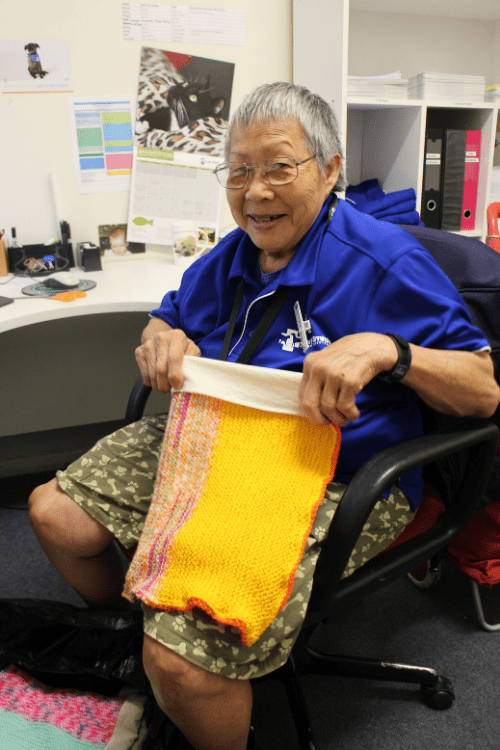
Jocelyn is Lort Smith's longest-serving volunteer. She started 25 years ago, at age 60. This means that, like Lort Smith, she celebrated her 85th birthday in the same year – just incredible!
Before starting at Lort Smith, Jocelyn worked at the Royal Melbourne Hospital for 18 years as the nurse in charge of the CT/MRI unit. She occasionally had animals come in for a scan from Melbourne Zoo, because the zoo's machines were too small!
Jocelyn has always loved dogs, and that's what inspired her to volunteer. It certainly isn't for the cats – she's "deathly allergic!"
"I've always said to my daughter, 'when I retire, I'll be doing what I can to help dogs.' Animals never tell you that you're horrible or smelly, they love you unconditionally," says Jocelyn.
We all need to be needed – and I need Lort Smith as much as they need volunteers.
Jocelyn
A lifelong connection
"When I was younger, I used to pick up strays and mum would get upset because we already had three dogs! So I made an agreement with the local butcher to clean up the shop at the end of the day in exchange for taking home bones for the dogs."
In 1965, Jocelyn brought her first stray dog home. It was covered in fleas, so she took it to Lort Smith to have it looked at.
"I would have struggled to pay the vet bill, and wouldn't have been able to if not for Lort Smith and the way we operate," remembers Jocelyn.
Crafting for a cause
The contribution Jocelyn has made to Lort Smith is immeasurable. Her favourite role, though, was running the shop, which no longer exists.
"I made/crafted things that I could sell. From Christmas bags to bone and fish shaped soft toys for animals. I made blankets, scarves with paw prints, anything that could support the hospital and the animals. I recall making hundreds of dollars in the first year."
"Back in the early days there was a roadside stall where we'd sell items to support the hospital. I crafted little sausage dogs with ears that button on and off that were really popular with kids. I ended up getting requests from friends at work, friends of friends, everyone! But they would have to pay – they were for a good cause and I didn't want people to take advantage," says Jocelyn.
During the 2019–20 bushfires, Jocelyn made wildlife pouches for koalas, wombats and joeys.
The biggest change Jocelyn has seen since she started volunteering at Lort Smith is the "mod-con stuff".
"Everything has become much more modern in terms of technology and I imagine this will only continue as Lort Smith gets bigger," says Jocelyn.
Not ready to retire
We often hear our volunteers talk about the friendships they've made at Lort Smith. Jocelyn is no exception.
"I've made some amazing friends over the years. The friendships are what keep me going, and they are only ever a phone call away," says Jocelyn.
Jocelyn loves volunteering for Lort Smith and has no intention of stopping anytime soon!
"I am not ready to retire! As long as I'm able I want to keep going – I'm not dead yet! I want to see all the new things happening. Besides, Lort Smith keeps me sane. We all need to be needed – and I need Lort Smith as much as they need volunteers," says Jocelyn.
"My daughter doesn't have to worry about me having nothing to do. When people moan about being bored, I ask if they've thought about doing something for someone else!"
We're sure you'll agree: Jocelyn is an incredible woman, and Lort Smith is lucky to have her!
Read more
- Tails of Lort Smith
Lyn
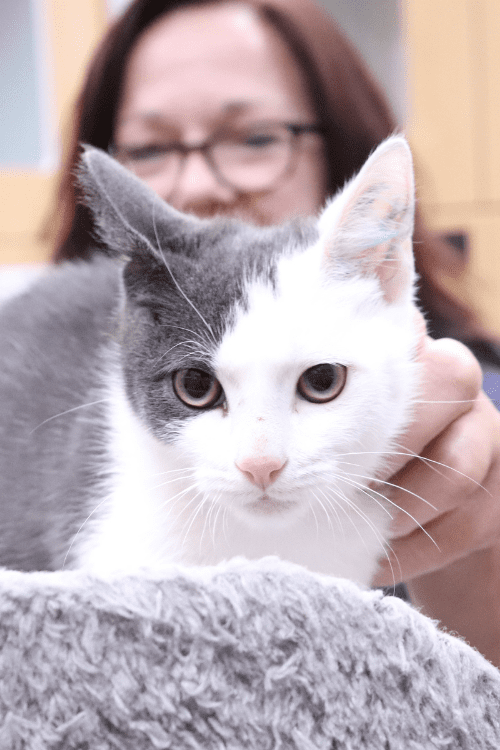
Lyn Orton has worked at Lort Smith as an Animal Welfare Officer for more than 35 years.
"The team joke that I went to school with Louisa Lort Smith!" laughs Lyn.
Growing up, Lyn always had a strong love of animals and wanted to be a vet. Life took her in a few different directions before she landed at Lort Smith, working with the animals in our Adoption Centre. Her duties include:
- guiding people through the often emotional surrender process
- working with the veterinary team to coordinate health assessments of each animal, and any extra medical treatment they need
- coordinating foster care
- giving lots of TLC and enrichment as each animal prepares for adoption
- helping to carefully match each animal with their perfect new family.
"It's so rewarding when the animals get homes, especially those that have been waiting for some time, or those with behaviour or health issues. We love receiving updates from the adopters," says Lyn.
I feel privileged to be able to play a small role in the Lort Smith story.
Lyn
Big changes
When asked about the biggest change she's seen at Lort Smith, Lyn is quick to answer: "The building of the new hospital", meaning the larger building in North Melbourne. "When I started, it was a series of portable structures," explains Lyn.
Since then, Lort Smith has grown even further, opening our clinic and Adoption Centre in Campbellfield.
"What those two women did [founders Louisa Lort Smith and Lady Frances Lyle] was just fabulous, and I feel privileged to be able to play a small role in the Lort Smith story," says Lyn.
A million stories
Lyn has a million tales she could share about her time at Lort Smith, from ghostly sightings on the premises to bringing in her own horses for "pony rides" at the Lort Smith carpark fetes. Her best-known story, though, is about her beloved George the goldfish.
"In 2014 George underwent life-threatening surgery to remove a tumour. It was either that or I had to put him to sleep. I love every single animal on the planet … and George was a little being who deserved a chance as much as anything else. The surgery gave George another three years of life! We had no idea that George's story would go global. It appeared in the news around the world and even made it into the Ripley's Believe It or Not book!" says Lyn.
Lyn has just adopted her 17th animal from Lort Smith, a kitten named Keith! But she says the most memorable animal she has met was a cat called Grace Kelly.
"It's not a very nice story. She arrived as a kitten with her throat slashed, one leg hanging by a thread and another severely damaged. The team worked so hard to stitch her back together. We saved her life but she lost one of her legs. I grew very attached to her and had to adopt her. She was such a princess and I often sang Amazing Grace to her – so it was only fitting that she be named Grace Kelly. She passed away just last year and lived to 18 years," remembers Lyn.
Read more
- Tails of Lort Smith
Nurse Lorraine
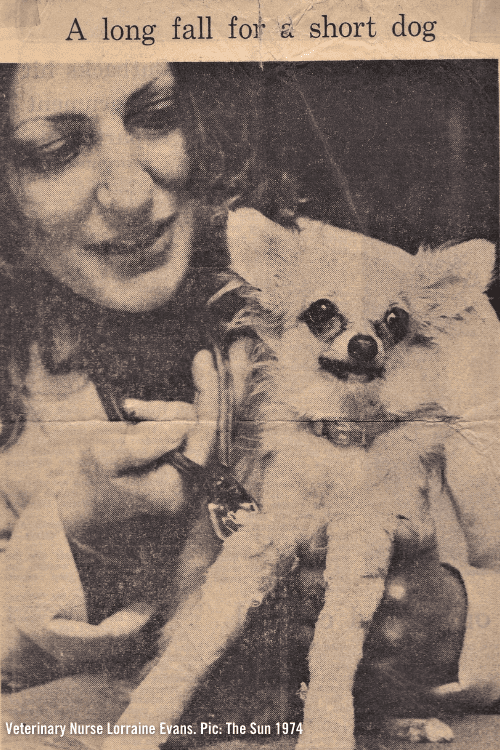
Lorraine Evans was only 19 years old when she started working at Lort Smith as a vet nurse, with no training, in the 1970s.
"Back then, parents thought that only boys needed an education. So at 16, I went to work at the Walter and Eliza Hall Institute of Medical Research. While there, I decided I wanted to be a vet nurse. No one typed in those days, I handwrote God knows how many resumes and sent them off to every vet in town!" laughs Lorraine.
Lorraine found science interesting, and says she must have had some kind of natural technical talent, as she used to do surgery on day-old mice.
At the time, there was no veterinary nursing course, so Lorraine enrolled in the brand-new Animal Technical course at Box Hill TAFE (four years part-time) while still at Walter and Eliza Hall.
"I had an interview at Lort Smith and got the job. They put me with Joan Humphries, a female vet, to learn from. She showed me how to correctly hold the different animals, how to scrub up and how to set up the operating theatre," explains Lorraine.
We were so busy, it was like animal MASH.
Lorraine
Animal MASH
Lorraine worked 13-hour days, from 8:30am to 9:30pm, and remembers being paid about $30 a week when she started.
"If there was a big emergency that couldn't wait til the next day, like stuck puppies, pyometra or a twisted stomach, there would be nights I'd be still cleaning at 11pm and due back early the next morning. We were so busy, it was like animal MASH. I learnt that young people are very resilient," says Lorraine.
During Lorraine's time, the entire staff was two "office ladies", four vets, four vet nurses, two people in the cattery and six in the kennels, a tea lady named Jean and a yard man named Harry.
"Back then, we didn't take appointments. People would just turn up, check-in at the office and the office ladies were expected to know what was an emergency! We would use index cards and nurses had to remain with their assigned vet for the full 13 hour shift. We were not to leave their side and told our very first priority was 'don't let the vets get bitten!' Vet nurses really are instrumental," says Lorraine.
Lorraine's main duties were surgical nursing, consult nursing, dispensing drugs and taking X-rays, including developing them by hand in the darkroom.
"I liked working in the theatre most. We would bring in cassette tapes and sing along to Abba and Joan Baez," smiles Lorraine.
Leading the times
"I think Lort Smith reaching 85 years is absolutely wonderful and I think it has kept up with the times. NO – it has led the times! I'm proud I was a part of the evolution of Lort Smith. Things were tough back then, but they were good."
"Louisa Lort Smith was obviously an animal lover, there cannot be any doubt about that. Her heart was always in the right place and Lort Smith did a lot of things early on in regards to education. Like promoting the abolishment of traps, handing out fact sheets about the exponential population growth of cats if you didn't have them desexed, the importance of vaccinations – during my era, there was lots of distemper and feline enteritis," remembers Lorraine.
"Overall, Lort Smith back then provided low cost, mostly very successful treatments to thousands of animals who otherwise would have missed out. I think the strays and staff were victims of the prevailing circumstances of the time – the tail end of the biggest Depression Australia has ever had. Lort Smith did a magnificent job despite this and I feel proud to have been a part of it," says Lorraine.
Read more
- Tails of Lort Smith
Dr Rod
Dr Rod Brooks was a veterinarian at Lort Smith in the 1980’s. It was his first job out of university and it was ‘all encompassing’.
Dealing with whatever cases came in, Dr Brooks recalls there would often be only one vet consulting and another in surgery each day.
“Working with senior veterinarian Dr Carrado Cimati was memorable. He was quite an amazing vet and mentor for young vets, and very much a character!” shares Dr Brooks.
Dr Brooks enjoyed the variety of cases he saw each shift, and being able to help disadvantaged people by charging less than private clinics.
The hardest component of his job, something that every vet would agree with, was having to euthanise animals. Back then it was a much larger number. Thankfully, times have changed – Lort Smith’s philosophy now is to never euthanise an animal that is capable of being rehomed.
“The most unusual animal I ever saw was a great big python, owned by an exotic dancer! He was my first snake and he was brought in because he wasn’t eating,” laughs Dr Brooks.
Dr Brooks believes the importance of the human-animal bond has grown stronger over time. “Where previously pets mostly lived outdoors, now they are very much an integral part of the family make-up,” he says.
“Lort Smith turning 85 years old and opening up Lort Smith Animal Hospital – Campbellfield Centre demonstrates the need there is in the community for the services that the organisation offers, and the amazing things done over years.”
“People should support Lort Smith because it provides services that are subsidised for people who otherwise couldn’t receive treatment. It provides much better care for animals where people may not take them to the vet,” explains Dr Brooks.
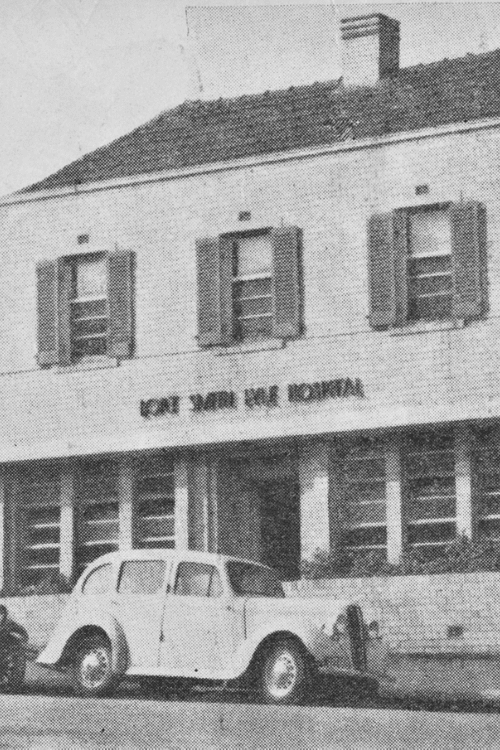
Fun fact: Dr Rod’s mentor – Senior Veterinarian, Dr Cimati, originally from Italy, resided in the flat above Lort Smith’s original hospital (pictured) with his family. This building still exists today and is used by Lort Smith’s administrative staff.
Read more
- Success Stories
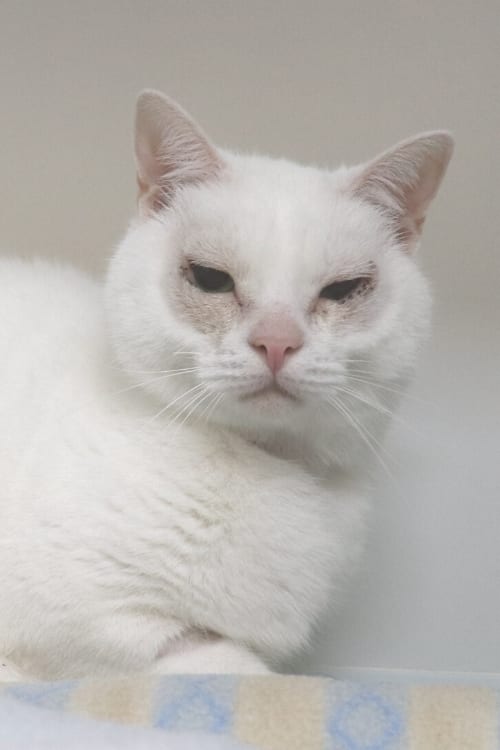
Albie
Like so many people who come to the Lort Smith Adoption Centre, 13-year-old Neisha and her mum Leonie had their eyes firmly set on who they wanted to adopt. But something unexpected happened.
"We've always had rescue cats and so we naturally looked online to adopt," says Leonie. "We found two cats, a bonded pair, at Lort Smith that we went to meet, but we found they weren't suitable for us, they were just too shy for our family."
After being encouraged to meet some of the other cats available for adoption, they met five-year-old Albie. Or more accurately, Albie introduced himself to them!
"He wouldn't leave me alone!" Neisha laughs. "He was just meowing and rubbing his head against my legs."
But Albie wasn't just your run-of-the-mill smooch.
Barely a night has gone by where I haven't gone to sleep with a white mass of fur right next to my head.
Neisha
A difficult start
Albie had a very difficult life before coming to Lort Smith. He had been living with a painful eye condition called entropion for years. Entropion is where the eyelid rolls inward, causing the eyelashes to irritate and inflame the eyeball.
Before Albie was put up for adoption, our vets performed delicate surgery to remove a thin strip of excess skin from his eyelids.
Our team is always very cautious with this procedure, removing only a small amount of tissue to avoid causing the opposite problem, called ectropion. While this avoids over-correction, in a small number of cases it can mean a second surgery is needed to completely fix the entropion.
Albie was significantly better after his surgery, but his entropion was so severe that he was one of those rare cases.
Two surgeries and some time in foster care later, he was ready for adoption.
Right where he wants to be
Leonie says learning about his condition, and knowing eye infections were something Albie would likely live with forever, wasn't a deterrent for them at all.
"It would've been so painful, living with ulcerations on his eyes for so long," Leonie says. "I'm really glad we are now able to look after him and make sure his eyes are ok for the rest of his life."
"He's really easy to handle and treat, and so easy to give medication to," she says. "He has such a sweet nature so it's sad to think he might've been put down just because of his eyes if he hadn't come to Lort Smith."
Now Albie gets to spend all day, and night, right where he wants to be: with his favourite person, Neisha.
"Barely a night has gone by where I haven't gone to sleep with a white mass of fur right next to my head," Neisha says. "He sounds a bit like a mild asthmatic when he purrs, which is a bit annoying but still adorable."
Without the support of our donors and community, Lort Smith would never have been able to dedicate as much time, care and resources to Albie's recovery. By donating today, you'll help more animals like Albie.
Read more
- Tails of Lort Smith
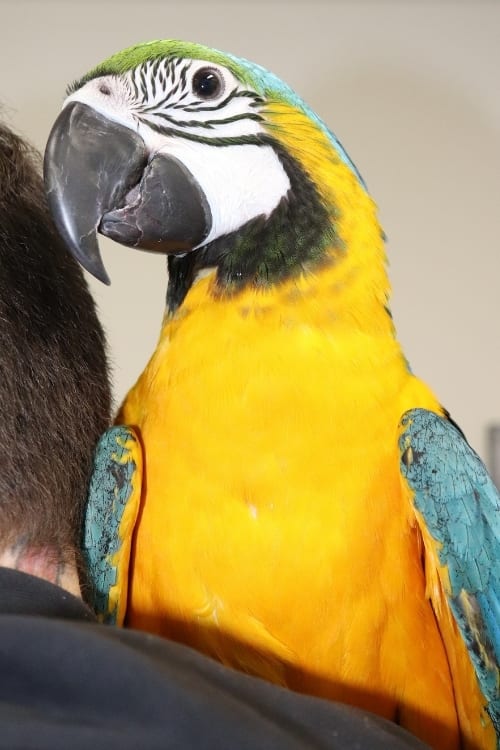
Shelby
Shelby was just 12 weeks old when Jess welcomed her into a family made up of a bearded dragon and two dogs. Knowing the average lifespan of a macaw is 60 years, with the oldest pet macaw reported to have lived to 112, Jess wasn't put off.
"It's why I got a macaw, I wanted a lifelong pet," says Jess.
An avid animal enthusiast, with a particular love of birds and reptiles, Jess was looking for an interesting pet that would challenge her. Shelby is allowed to roam and fly freely in their home, and also has a walk-in aviary in the lounge room.
She was a very sick bird when I last saw her, and would have died had the tube not been found and removed.
Dr Tristan
Not herself
Jess first noticed Shelby wasn't quite herself at five months old. She became less chatty, was regurgitating her food, looked underweight and had droopy wings.
After visiting another vet clinic, which couldn't give a clear diagnosis, Jess brought Shelby to Lort Smith, as she knew we had an accident and emergency department and could see her quickly.
Fortunately, Unusual Pets and Wildlife Veterinarian Dr Tristan was on shift.
"When I took radiographs a surprisingly large tubelike foreign body was visible. I was able to take it out of the stomach using an endoscope."
"Once we removed it we could see that it was a feeding tube. The carers were not missing any feeding tubes so I suspect the tube had been swallowed while still at the breeders – sitting in the stomach the whole time they have had her," says Dr Tristan.
It's very inappropriate for a breeder to sell an unweaned bird. Lort Smith doesn't recommend buying unweaned birds unless you're very experienced in caring for birds.
Jess was very surprised at what Dr Tristan found, especially the length of the feeding tube, which measured 8 cm!
"I've been really happy with Dr Tristan and the service we've received from Lort Smith. He is really engaging and very informative," says Jess.
Back to full health
At a recent recheck appointment, Dr Tristan confirmed Shelby has made a full recovery, is looking much brighter, and is now at a healthy weight.
"She was a very sick bird when I last saw her, and would have died had the tube not been found and removed," explains Dr Tristan.
Jess is delighted Shelby is back to full health, eating her favourite blueberries and causing a ruckus for Jess and her partner.