Client stories
Every animal that comes through our doors has a story. Here are some of the pets, people and moments that make Lort Smith what it is.
Filter
Filter
Story
Clear filters
View stories
Filter
Story
- Tails of Lort Smith
Mary Puppins
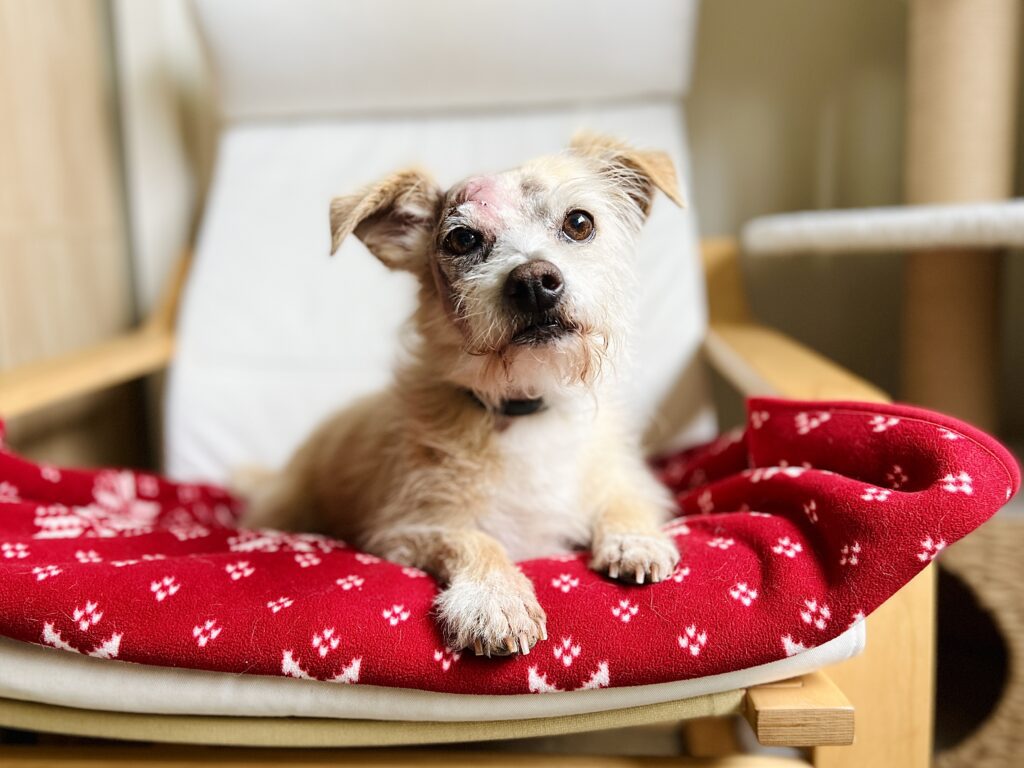
Mary Puppins didn't have an easy start to life. Unloved, terrified, and with an illness that could easily have killed her, Mary very nearly didn't make it through her first year.
But thanks to generous donations from the community, we had the skills, equipment and capacity to give Mary Puppins the best chance at life.
"Mary Puppins was absolutely petrified of people when she first arrived at our shelter," remembers Mandy Doolan, Adoption Centre Manager at Lort Smith Campbellfield.
Our trainers worked on building Mary's confidence and restoring her faith in people. Over time, fearful Mary began to show her loving, playful side, and soon became a firm favourite at the Adoption Centre. "We watched her blossom," Mandy says. "It was really special to see."
We watched her blossom. It was really special to see.
Mandy Doolan, Adoption Centre Manager
A New Year's Eve emergency
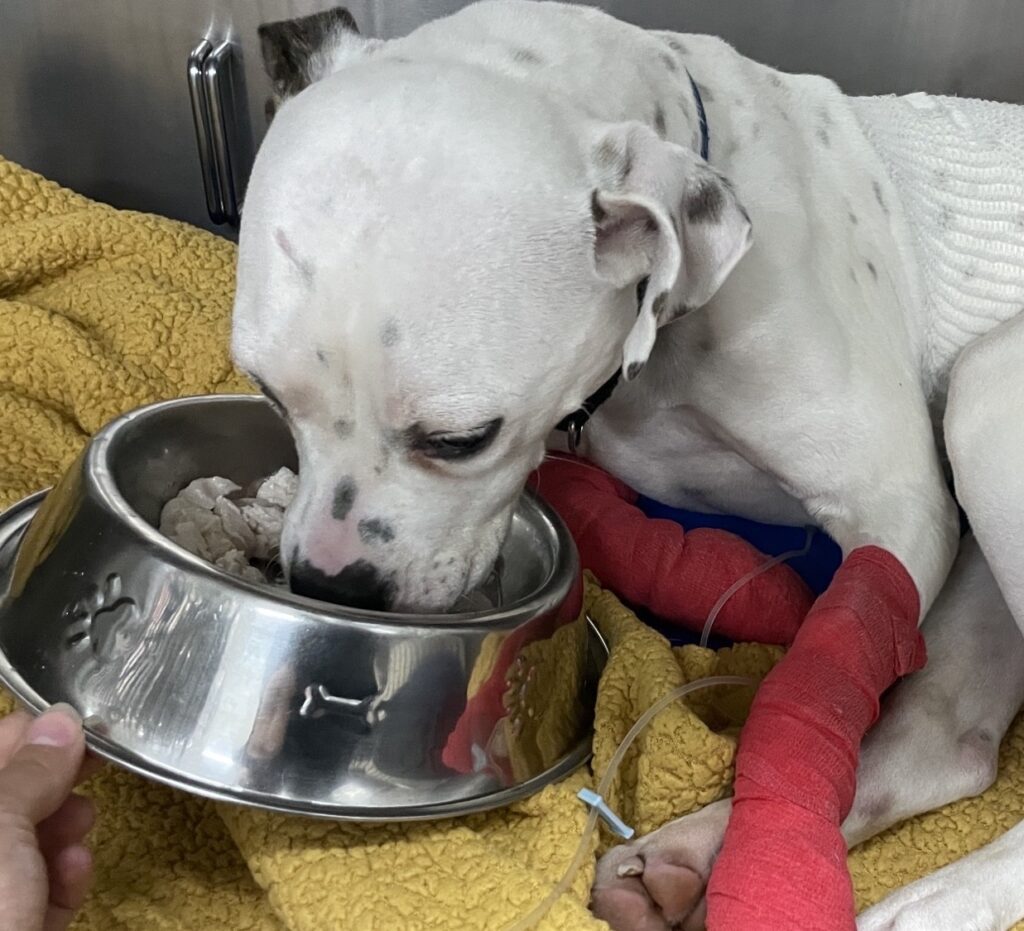
But on New Year's Eve, Mary's triumph almost turned to tragedy. She began vomiting, became extremely lethargic, and was off her food. Her foster carer rushed her to Lort Smith Animal Hospital for help.
Thankfully, our vets had on-site access to sophisticated diagnostic facilities and equipment, including pathology and X-ray machines, which helped them find the source of her pain: Mary Puppins had an obstructed intestine, a condition that could easily have become fatal.
Our surgeons performed an enterotomy to remove the blockage and, while doing so, found that Mary's intestines were inflamed and grey. She was in very grave danger of peritonitis, a potentially deadly infection of the abdomen. Mary was moved to the ICU.
Her best life
When we look back over Mary's story, the work of Lort Smith and its supporters is clear every step of the way. Working together, our vets, shelter staff, volunteers and supporters were able to first protect her, then house her, and ultimately heal her.
Two months after her ordeal, Mary Puppins was adopted into a loving new home, and instantly bonded with her new sibling, a boisterous chocolate Labrador. She's now living what can only be described as her best life.
Mary Puppins' story could very easily have had a different ending, if not for the extraordinary care of the Lort Smith staff and volunteers, and the generosity of everyone who donated.
Read more
- Success Stories
Dr Tristan
Not many people know that Lort Smith cares for more than just cats and dogs. Yes, they make up most of our patients, but our vets also regularly treat birds, rabbits, ferrets, turtles, lizards, snakes and wildlife!
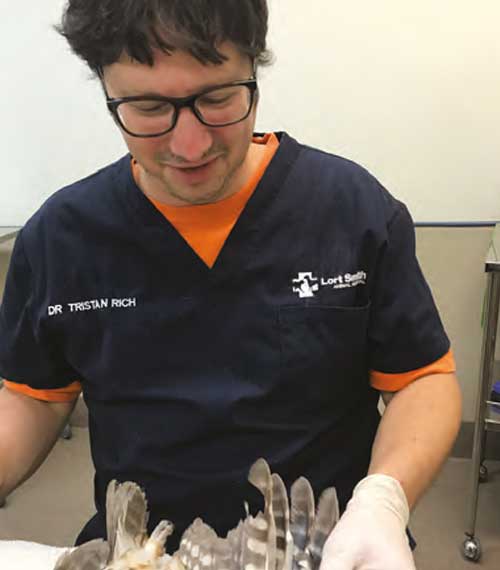
So when an owl was brought to our emergency department after being found on a construction site covered in a sticky substance, our Unusual Pets and Wildlife Veterinarian, Dr Tristan Rich, immediately set about cleaning it up. Sadly, he realised the owl had lost a lot of feathers during its ordeal and could no longer fly.
Owls need to fly to hunt, and it would take months for the feathers to grow back before it could be released into the wild. The poor bird was extremely distressed being inside the vet clinic, so Dr Tristan decided to try something a little outside the box.
It's sad that the first owl didn't make it but I'm grateful that it was able to save another bird's life.
Dr Tristan Rich
An ancient technique
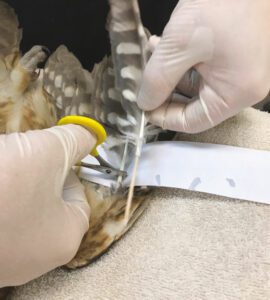
"We were incredibly lucky in that an owl of the exact species — a Boobook Owl — had been brought to us just a few days prior," he says. "Unfortunately, that owl didn't survive but it had completely undamaged feathers. So, I decided to perform an imping."
Imping is a procedure traditionally performed by falconers, transplanting old feathers onto a new bird to help it fly. Dr Tristan says the technique has been around for hundreds, if not thousands, of years. It involves making cuts in the quills of both the damaged and replacement feathers, and connecting them with a small rod. The new feather is then glued into place.
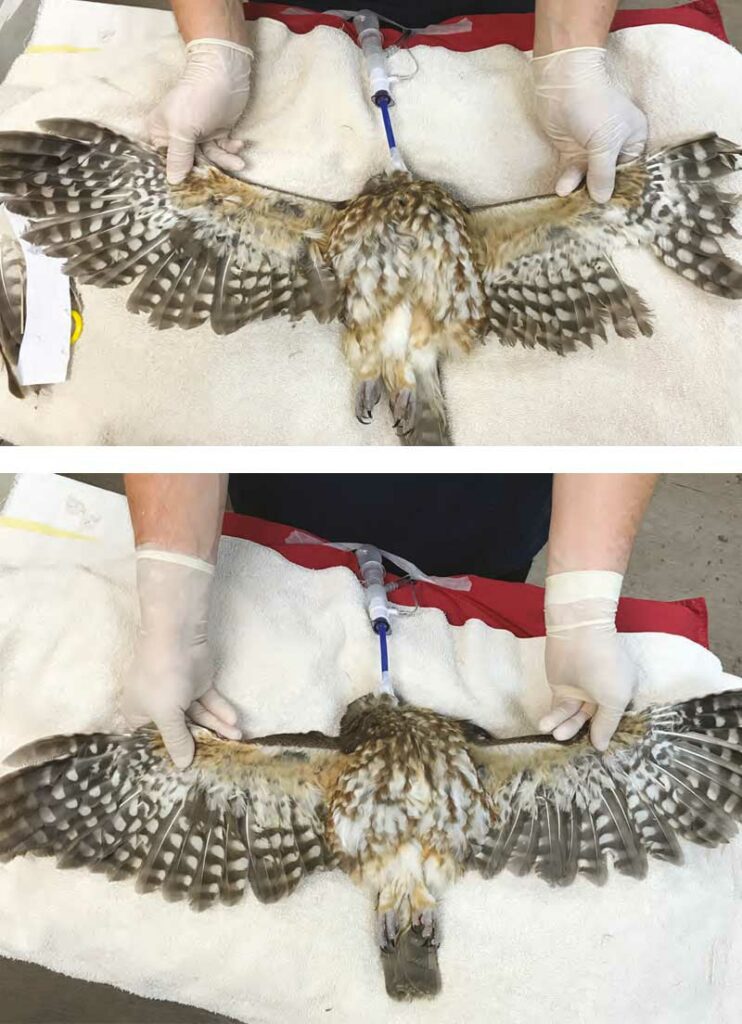
It's a very fiddly procedure, says Dr Tristan. The more feathers, the longer it takes, and this case took forever because the owl had lost a lot of feathers!
While it's not entirely uncommon for bird clinics to perform an imping, it was certainly an unusual day for Dr Tristan, and was only possible thanks to the coincidence of the two owls being brought in just days apart.
"It's sad that the first owl didn't make it but I'm grateful that it was able to save another bird's life," Dr Tristan says.
Soon after, our team had the privilege of releasing the owl back into the wild.
Read more
- Tails of Lort Smith
Louisa Lort Smith
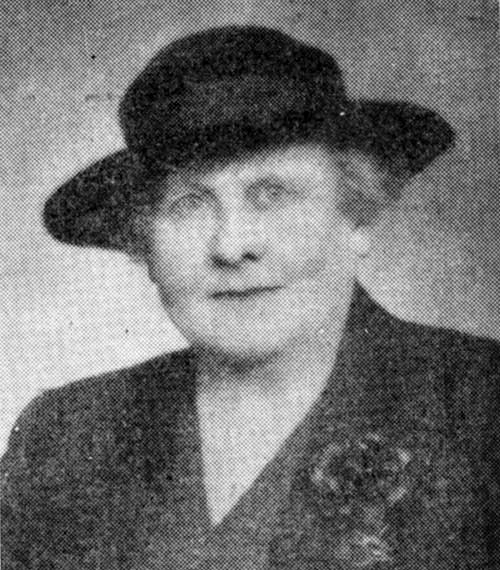
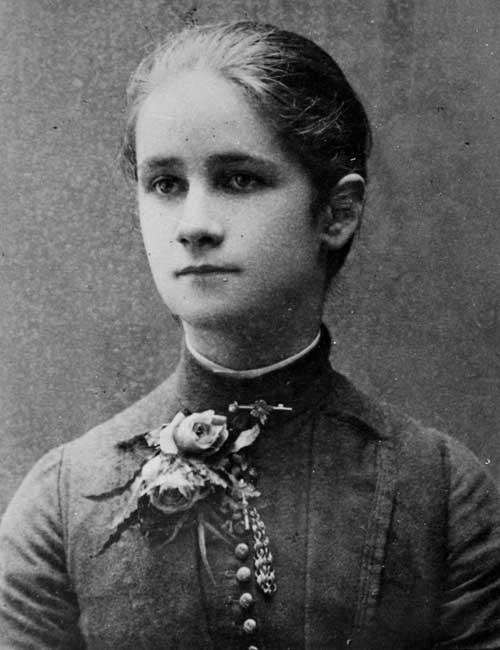
The organisation is named after Louisa Eleanor Lort Smith (née Montgomery). Born in 1875, Louisa was the daughter of an Irish soldier settler, and grew up on a cattle farm, "Childhood Heart", near Sale in Gippsland, Victoria.
One of twelve children, young Louisa was sensitive to animal welfare, and this shaped a lifelong dedication to preventing cruelty to all animals.
Marriage to respected Melbourne solicitor Charles Lort Smith in 1925 didn't dampen Louisa's fierce belief in animal rights. In 1927, she and other advocates formed the Animal Welfare League of Victoria. A true visionary and well ahead of her time, Louisa recognised the need for an animal hospital open to all creatures, whatever their carer's circumstances.
No one has ever been able to resist Lady Lyle and Louisa Lort Smith.
A journalist, 1938
Lady Frances Lyle
The indefatigable Louisa convinced her friend Lady Frances Lyle, a passionate animal lover herself, to donate £5,000 to the project. The Lort Smith-Lyle Hospital for Sick and Injured Animals opened in Villiers Street, North Melbourne, in April 1936, and is still serving the community from this central location.
Since then, demand for our care has led to a new clinic and adoption hub in Campbellfield, in Melbourne's northern suburbs, which opened in December 2021, and the redevelopment of our Villiers Street hospital.
A journalist wrote in 1938 that "No one has ever been able to resist Lady Lyle and Louisa Lort Smith", and that's as true today as it was then.
The mission of these formidable women, and their progressive ideas about the common good of animals and the people who care for them, are as powerful as ever. The original Lort Smith vision of a world where everyone can share the love of an animal is definitely alive and well in the 21st century.
Read more
- Tails of Lort Smith
Allie
When we first met adventurous cat Allie, she had substantial injuries after a brutal encounter with a fox. Her carer, Jess, brought her into Lort Smith Animal Hospital in North Melbourne when the usually lithe and nimble cat's condition rapidly declined and she was in extreme pain.
Allie was examined by our vets, who knew exactly what she needed to survive.
However, the cost of Allie's care was high, and Jess knew that the only way she could survive was to surrender her into the loving care of Lort Smith.
Allie had life-saving surgery to amputate her injured leg. It was one of nearly 10,000 surgeries performed at Lort Smith each year. A delay in this surgery would have meant a much more tragic outcome.
She was a completely different cat. She wanted attention and constant pats.
Kate Andrews, Animal Welfare Officer
Recovering on three legs
Only a few days after surgery, Allie was visibly happier and more alert, and our experienced veterinary staff could see she was recovering well. Allie's uncontrollable pain was gone, and she was quickly learning how to navigate the world on three legs.
"She was a completely different cat. She wanted attention and constant pats. Allie picked up walking and using three legs like a pro. It seemed almost natural to her," says Kate Andrews, Animal Welfare Officer at our Adoption Centre.
Allie has come a long way since arriving as a beautiful but injured pet. She won hearts at the Adoption Centre with her gentle nature, and is now thriving in her new home.
Allie is alive today thanks to the wonderful supporters of Lort Smith.
Read more
- Tails of Lort Smith
Billy
When Billy arrived at Lort Smith, he was dazed, unresponsive and in pain.
"It is very upsetting to think of an animal being in pain and suffering like this, for so long," says Dr Kassandra, one of our vets. "Billy came to us with significant head injuries, but they weren't fresh – they were likely at least a week old … He had been walking around in pain all that time."
A mystery
Billy had very serious burns to his face, and how he got them is still a mystery. "We initially assumed that Billy had been hit by a car," says Dr Kassandra. "[But] a lot of the trauma normally associated with being hit by a car, such as grated nails, were absent with Billy."
"His general condition was pitiful – he was skinny, and his coat was matted and flea-ridden. He was moderately anaemic because of the fleas. I was very shocked at the state of him."
He was so unresponsive that our team first thought he might be deaf. After cleaning his wounds and starting pain relief and antibiotics, Dr Kassandra found he could hear. Billy was dealing with something that can be even harder to manage: severe emotional trauma.
He is a completely different dog to the one I first brought home.
Jacqui, foster carer
Learning to feel safe
We asked one of our long-term foster carers, Jacqui, to look after him. "My colleagues know I am a sucker for the 'underdog' and really desperate cases, so Billy was the perfect next dog for me to welcome into my home," she says.
At first, Billy was terrified. "He had shut down to the human-animal bond and was so scared of me," says Jacqui. "I slowly introduced him to my two dogs who are experienced foster siblings, and he was pleased to see them … but if I approached him, he panicked and fled.
"He would cower shivering in the corner and pretend I wasn't there, in the hope that I would go away."
Then one morning, he had two seizures in 20 minutes. Jacqui rushed him back to Lort Smith, where he spent two nights in our Intensive Care Unit. A CT scan of his head found an old pellet lodged in his jaw. "We found it incidentally – you cannot feel it from the outside, and there was no associated swelling, which indicates it must have been an old injury," says Dr Kassandra.
A different dog
Our vets are carefully weaning Billy off his seizure medication, to see whether he needs it long term, and he has regular acupuncture with Dr Amanda to help with his fear and anxiety. "He is always very relaxed and calm afterwards," says Jacqui.
Slowly, Billy is learning to trust. "He is a completely different dog to the one I first brought home," says Jacqui. "Whilst he is still quite shy, he's very comfortable with me and loves to crawl into my lap for cuddles and seeks out all the pats he can possibly get!
"There is definitely a family out there that will love a special little dog like Billy."
"If we had not given Billy a second chance by providing top class veterinary care for free, we would never have realised his potential as a much-loved animal companion," says Dr Kassandra.
Animals like Billy rely on our supporters. Your donation helps us give them the care, time and patience they need.
Read more
- Success Stories
Mila
Cassandra has fostered greyhounds for years. And while she loved every single one, she always knew she was meant to be their "stepping stone": the person who looked after them until their families arrived.
But one day during lockdown, she had a feeling that maybe she was finally ready to bring a dog into her life permanently.
And that's when she saw Mila on Lort Smith's website. "I loved all my Greyhound boys but none of them have taken my heart the way Mila has," she says. "When I met Mila, I knew very quickly that the reason I fostered for so long was that I was making space for her. As soon as I brought her home, I knew that I was her forever home. And I've never felt that before."
I think it's a real honour to be loved by an older dog.
Cassandra
Ready for her needs
At 10 years old, Mila had been surrendered to Lort Smith with a range of health issues: dental disease, a mild fever, luxated patellas and some deformity in her front legs, an irregular mass in her spleen, excess weight, and Cushing's disease, a syndrome that makes her body produce too much of a hormone called cortisol, and can affect her ability to fight infection, control her weight and respond to stress.
"Lort Smith asked me to have a think about whether I was willing and able to take that on and support her with her health issues," says Cassandra. "To be honest, it was totally fine for me. Fostering greyhounds meant helping dogs settle in to a new life, so I'm used to considering additional needs for pets. It wasn't a concern for me but I'm glad they checked because I think if people are going to adopt an older dog, they need to be receptive to their changing needs."
Earning her trust
While it was love at first sight for Cassandra, she says it took Mila a bit longer to open up to her. "She was quite aloof to start with. It wasn't that she was well behaved, she was very polite — like she was too afraid to touch anything that wasn't hers," Cassandra says.
"During the first six weeks or so, anytime that she wasn't being fed or actively engaged with, she would go and sit under the dining room table. I have a feeling it was a habit from her past." Slowly, with Cassandra's encouragement, Mila learned she was safe and loved in her new home. "The first time she went and grabbed a new toy and brought it to me was massive," Cassandra says.
"I think it's a real honour to be loved by an older dog. They've been through things; there's no guarantee that they will be comfortable with you, unlike puppies who don't know any better. Mila has seen some things; she's got her own baggage and it's such a delight to watch her unpack that around me.
"There's something really special about obtaining that love because it's not a given. You have to earn it and it's really special when you get it."
And if you're looking for your own Mila, see the animals waiting for a home. You never know who might win your heart!
Read more
- Success Stories
Chester
There are so many reasons an animal might be surrendered into Lort Smith's care. For six-year-old Chester, the breakdown of his family meant they could no longer care for him and his many health issues. You see, Chester has a heart murmur, a chronic eye disease, dental disease and skin issues — and on top of all that, he is FIV positive.
Understanding FIV
Feline immunodeficiency virus (FIV) is a very misunderstood virus. It was once thought to be dangerous, a death sentence for cats. And while it's true that FIV-positive cats have a weaker immune system than uninfected cats, we now know they actually share a similar life expectancy and quality of life.
Yet the stigma around the virus remains. "People often associate the virus with high costs of care and a shorter lifespan," says Erin, one of our Animal Welfare Officers. "But as we've seen with lots of other cats who have come through our shelter, with regular vet checks and a lot of TLC, FIV-positive cats can live as fulfilling and happy a life as any other cat."
Lort Smith works hard to educate people about the realities of FIV. But we also know from experience that seeing the words "FIV positive" on a cat's adoption profile can still put a lot of people off.
He's just the most loving, docile cat I've ever met.
Lisa
There to stay
Despite his many medical issues, we knew Chester would make an incredible pet for the right person.
We placed Chester in foster care with Lisa and her mother while he recovered from dental surgery. Because FIV-positive cats tend to take longer to be adopted, we thought he would benefit from some time away from the hospital until we found him the right home. But the moment Lisa brought Chester home, she knew he was there to stay.
"He just slotted in perfectly," she says. "He's just the most loving, docile cat I've ever met. I'm my mum's carer and he's so gentle and so lovely to her. We both bonded immediately with him, and him with us."
As for the FIV, Lisa has no concerns whatsoever, and encourages everyone to consider adopting an FIV-positive cat.
"It doesn't affect him as far as I can tell. He seems comfortable. And I'm not concerned about it, because he won't ever be around other cats as he's an indoor cat."
We couldn't have asked for a better outcome for Chester. But sadly, so many cats are overlooked every day because of misunderstood health issues.
Please donate today and change the lives of animals like Chester. There will always be animals like him who come through our doors needing our help.
Read more
- Volunteers
Cindy
I wanted to share with you my story of being a Lort Smith volunteer foster carer, and my time with Maui.
I've been a Lort Smith volunteer for about six years. Maui is my first foster — a bit of a challenging one to start with! He's certainly been keeping me on my toes, but he's just such a beautiful dog.
I remember seeing him in the kennels. He'd had a couple of operations, first to remove a bone that was stuck in his mouth, then they found a lump on his testes while they were desexing him.
He had a cone on his head, and he was very barky. But as soon as I entered his enclosure, he became this big softie. I just knew he wasn't a big scary dog — he was a gentle soul. He was just anxious because of what he'd been through.
Because he's fought and overcome so much … he's really special.
Cindy
Settling in
The first night I took Maui home, he was like a little bulldozer. He needed to investigate every inch of the house, knocking things out of the way, sticking his head under the couch — he sniffed the entire house clean!
But that night, he just became a big snuggle bug. He wanted to be as close as possible to me and he just stared at me all night. If he'd been kept outside his whole life, he probably couldn't believe that I'd let him cuddle on the couch with me.
I knew Maui had some incontinence issues at the shelter and I'm lucky that I have floorboards! But he's gotten a lot better — I haven't found any wet patches on the couch or on his bed, so I think we're ok now.
A scary night
Maui was doing really well … and then, all of a sudden, he wasn't. I knew he was a bit off one night, that something was up, but I thought maybe he just needed to sleep it off. Then at one in the morning, he fell off the bed and the sound woke me up. His eyes were darting side to side, and he was vomiting and peeing everywhere. I was totally freaking out … I just kept thinking, "Oh goodness, he's going to die."
But we were very fortunate. I was able to rush him to emergency at 3am and Lort Smith picked him up in the morning and took him to ICU to run tests. I'll be honest — it was a really scary experience.
They're still running tests on exactly what the problem is. He was in last week and he had a CT scan and a spinal tap — he's got some beautiful little shaved patches on his body from all the tests! — and I'm hoping they'll get some answers from that, because he's a bit of a mystery at the moment.
He's still head tilting and a bit wobbly. When he's calm, he seems to be ok but if he sees or smells something interesting, or if there is someone at the door, then he'll tilt a bit more and that causes him to lose balance.
Saying goodbye
I don't know how I'll go with saying goodbye to Maui. People have asked me, "How can you give him up?" and I've thought, "Well, if he gets a loving home, then I can keep my home open for my next beautiful foster." I'll be very sad, I admit.
Even with all the bumpy stuff we've gone through, I think it's made me a bit more attached to him. Because he's fought and overcome so much … he's really special.
It will be a happy day and a sad day when the time comes for Maui to be adopted.
I hope this gives you a small glimpse into what it's like being a Lort Smith foster carer, and why donating is so important. It gives animals like Maui a second chance.
– Cindy
Lort Smith couldn't save so many animals' lives without the help of our incredible network of foster carers, and the kind support of our community. Please donate today.
Read more
- Tails of Lort Smith
Lucky
Lucky, a five-year-old ginger cat, came to Lort Smith after it was suspected he had been hit by a car. His carers told us he had been missing for days, and when he came home, they knew something wasn't right. They brought Lucky in to see Dr Brittany, who agreed that Lucky hadn't been so lucky and needed urgent medical treatment.
Dr Brittany assessed Lucky and found his left back leg was broken. Lucky was limping and couldn't put weight on it. X-rays confirmed he had a fracture that would need either a bone fusion or an amputation. After much discussion and consultation, the team decided amputation was the best option for him. He also needed all the teeth on one side of his face removed, because of the suspected car accident.
Lucky was surrendered into our care and recovered well from his surgery. Like most animals who have an amputation, he was happily strutting around on three legs within a couple of weeks. He settled into his foster home with one of our Animal Welfare Officers, Beck, who cared for him as he recovered.
Lucky for Lucky, he still has eight lives remaining …
Pillow foot
Beck soon noticed that Lucky's paws were changing. They looked inflamed and swollen, and he couldn't walk for long, taking just a few steps before lying down again. Beck brought Lucky in to see a vet, who diagnosed him with plasma cell pododermatitis, commonly known as "pillow foot". Pillow foot is caused by the immune system being mistakenly triggered, often by a minor infection the body tries to fight off. In doing so, it overproduces white blood cells, which pool in the foot pads, causing pain and inflammation.
Fifty per cent of cats who develop pillow foot are affected by feline immunodeficiency virus (FIV). That was the case for Lucky, who had tested positive before his first surgery. FIV interferes with the immune system and depletes white blood cells, making it harder for cats to fight off illness and disease.
After a few weeks of steroid and antibiotic treatment, Lucky's pillow foot had almost entirely disappeared. Beck's diligence and care meant his condition could be treated early, which is vitally important for cats with FIV. Lucky's pillow foot may return in future, and he may be more likely to get diseases or infections than other cats, but many cats with FIV live a long and otherwise healthy life.
Staying put
Beck first fostered Lucky so he could have some time away from the hospital and recover at home, but she quickly fell in love with his gentle personality and fondness for belly rubs. Beck's family felt the same, and together they decided Lucky would stay for good.
Lucky for Lucky, he still has eight lives remaining …